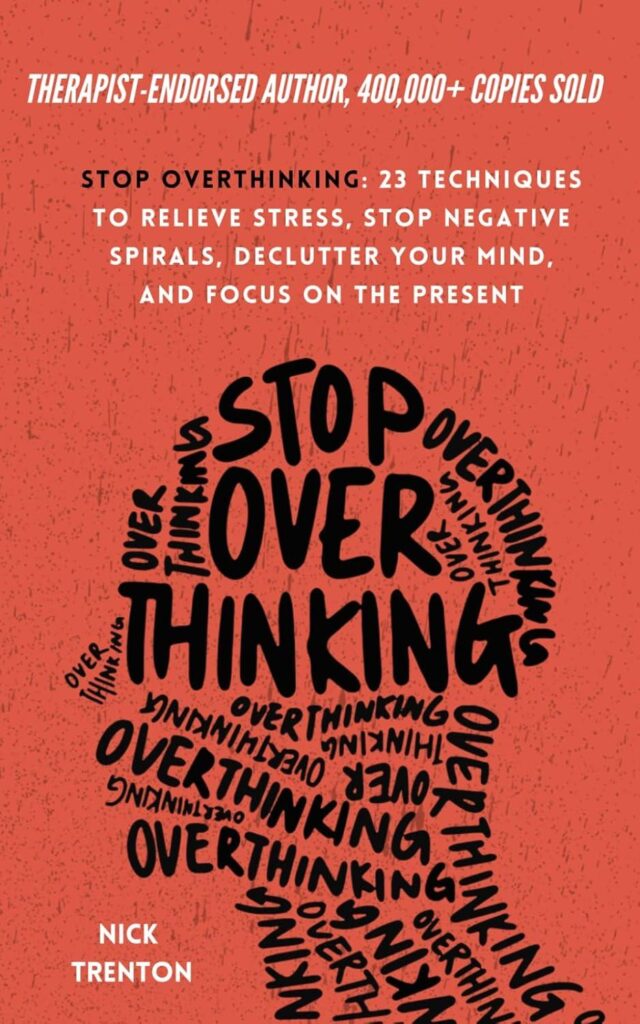
In a world increasingly defined by relentless demands and a constant barrage of information, overthinking has quietly snuck into our daily lives, shackling us in loops of anxiety and self-doubt. If you’ve ever found yourself spiraling into a web of worries, stuck in a mental tug-of-war between the past and the uncertain future, you’re not alone. Many of us experience this exhausting cycle, desperately seeking relief from the chaos in our minds. That’s why we were drawn to “Stop Overthinking: 23 Techniques to Relieve Stress, Stop negative Spirals, Declutter Your Mind, and Focus on the Present” by Nick Trenton, an insightful guide designed to break the cycle of overthinking and help us reclaim our peace.
With 200 pages filled with practical advice and proven strategies, this book promises not just to help us identify our negative thought patterns but to actively dismantle them. Through our firsthand exploration of Trenton’s techniques, we’ve unearthed methods that resonate on a personal level, providing real insights into how to navigate our mental landscapes more effectively. From identifying our triggers to introducing mindfulness exercises,each chapter offers a refreshing outlook on the quest for serenity.
Join us as we delve into our experiences with “Stop Overthinking” and examine how its scientifically-backed approaches can empower us to live more fully in the present,freeing ourselves from the chains of anxiety and fostering a healthier mindset. Together, let’s explore the path to calm and discover how we can transform overthinking into clarity and focus.
Table of Contents
Overview of Our Journey with Stop Overthinking

Our journey with “Stop Overthinking: 23 Techniques to Relieve Stress, Stop Negative Spirals, Declutter Your Mind, and Focus on the Present” has been nothing short of transformative. This insightful book is designed to help individuals like us who frequently enough find themselves trapped in a whirlwind of thoughts. Whether it’s ruminating over past decisions or worrying about what tomorrow might bring, the book understands our struggles deeply. It arms us with techniques that do more than just scratch the surface; they dig into the core of overthinking, offering actionable steps to regain control of our minds and live more peacefully. With the author, Nick Trenton, guiding us, we felt we were not alone on this path toward mental clarity and calm.
One of the standout features for us was the practical nature of the 23 techniques presented throughout the book. Each method was easy to digest, allowing us to pick and choose what resonates with our unique experiences.For instance, we especially appreciated “The 4 A’s of Stress Management,” wich succinctly lays out four clear strategies: avoid, alter, accept, and adapt. This framework alone made it easier for us to understand our stress triggers and act upon them efficiently. Trenton’s engaging writing style made complex topics approachable, creating a space where we felt comfortable exploring our mental health issues without feeling overwhelmed.
As we delved deeper into the chapters, we encountered various techniques, such as the 5-4-3-2-1 Grounding Technique and the SMART Goals framework. These methods provided us with tangible tools to handle our emotional responses and set realistic objectives, making it feel less daunting when tackling our daily lives. We also found the sections on meditation particularly enlightening. They emphasize the importance of centering our focus on our breath, an essential yet frequently enough overlooked aspect of mental well-being. Implementing these practices not only helped reduce our stress but also fostered a greater sense of mindfulness that often eludes us in today’s fast-paced world.
the journey we embarked on while reading this book has truly rejuvenated our approach to dealing with overthinking. equipped with newfound awareness and effective strategies,we felt motivated to take proactive steps in managing our thoughts.The techniques resonate with readers at different stages of their self-enhancement journeys, making it a versatile resource for anyone eager to lessen their mental clutter. Whether it’s anxiety, stress, or just the everyday challenges of life, we’ve found hope and actionable pathways that lead towards calm.
Exploring the Key Techniques for a Clearer Mind

We all know that feeling when our thoughts spiral out of control, making it hard to focus on what truly matters. This is why “Stop Overthinking: 23 Techniques to Relieve Stress, Stop Negative Spirals, Declutter Your Mind, and Focus on the Present” resonates deeply with many of us looking for a clearer mind. One of the standout features is the way the author, Nick Trenton, delves into practical techniques that we can easily incorporate into our daily lives.

The book opens our eyes to effective strategies like “The 4 A’s of Stress Management,” which are applicable during those overwhelming moments. Remembering to avoid, alter, accept, and adapt can break the cycle of overthinking. As we navigate our daily stresses, we find that these methods are not just theoretical; they have real-life applications that can truly change our mental landscape. The language is approachable, ensuring that we can grasp the ideas without feeling lost in jargon. This makes it perfect for anyone, whether we’re just starting to confront our anxieties or are further along in our journey.
We appreciate how each technique is presented with relatable examples, bringing the concepts to life. One technique that caught our attention is “The 5-4-3-2-1 Grounding Technique.” It’s a fantastic tool for bringing our focus back to the present, especially during moments of anxiety. Moreover, the emphasis on mindfulness throughout the book illustrates the importance of being in the moment. By engaging with these techniques, we realize that the path to a more peaceful state of mind is not only achievable but also enjoyable.
In terms of layout and ease of reading, this book provides a smooth experience. We found the chapter summaries at the end particularly helpful, letting us revisit key points when we needed a refresher. the balance of depth and clarity helps us connect with the material, ensuring that we’re not just reading but truly understanding and applying what we learn. the book stands as a beacon for anyone ready to take control of their overthinking and pursue a more liberated mental state.
Unpacking the Features that Enhance Our Experience

“stop Overthinking: 23 techniques to Relieve Stress, Stop Negative Spirals, Declutter Your Mind, and Focus on the Present” offers a wealth of features that truly enhance our journey toward mental clarity and emotional resilience. One standout aspect is how the author presents the techniques. Each method is broken down into easily digestible steps that allow us to apply them effectively in our daily lives. This clear structure makes it simple for anyone to pick up and implement the strategies without feeling overwhelmed.
A key feature we appreciate is the focus on practical tools for stress management. Techniques like “The 4 A’s of Stress Management”-avoid, alter, accept, and adapt-are not only memorable but also incredibly useful. As we navigate our lives, having these four approaches at our fingertips can significantly improve how we tackle stressors. The author effectively demystifies complex psychological concepts, making them accessible and applicable, which is invaluable for us.
Additionally, the emphasis on mindfulness and grounding techniques stands out. For example, “The 5-4-3-2-1 Grounding Technique” is presented in a relatable way, encouraging us to practice being present. This method serves as a gentle reminder that even in chaotic moments, we can anchor ourselves through simple, conscious actions.The blend of theory and actionable advice fosters a deeper understanding and provides a toolkit for us to work through our anxieties and overthinking.
Another aspect we admire is how the content resonates personally. The author shares personal anecdotes and relatable scenarios that help to build a connection. This engagement allows us to see ourselves within the narrative, making it easier to relate to and implement the techniques. Having that personal touch helps transform what could be a dry read into something genuinely engaging,thus enhancing our overall experience with the material.
the comprehensive approach taken throughout the book ensures that multiple aspects of overthinking are covered. from practical techniques to emotional insights, we find a holistic guide that speaks to the complexity of our mental health challenges. With these features combined, we are equipped with the tools necessary to reclaim our peace of mind, making it a must-read for anyone experiencing the burdens of overthinking.
Insights Gained on Stress Relief and Momentary Focus
Stress relief and momentary focus are at the core of the techniques shared in this book.Each technique we discover serves as a lifeline, helping us navigate the turbulent waters of overthinking. From our first foray into meditation to more advanced methods like the “5-4-3-2-1 Grounding Technique,” we find ourselves equipped with practical tools to not only manage stress but also stay anchored to the present moment. This journey is about reclaiming our lives from negative spirals and transforming the chaos of our thoughts into clarity.
As we delve deeper into this guide, one concept stands out: the importance of awareness. By identifying our stress triggers through the “4 A’s of stress management” – avoid, alter, accept, and adapt – we start to understand the root causes of our weary minds. It’s enlightening to realize that these techniques aren’t just theoretical; they act as blueprints for our daily lives. Implementing them practically leads to a shift, making stress management feel within our grasp rather than a distant goal.
There’s something very powerful about the author’s approach, making complex psychological concepts accessible. It’s not just about understanding the science behind overthinking; it’s about applying what we learn. Each chapter invites us to take actionable steps, ensuring that we don’t just read but actively engage.The overall experience becomes a shared journey toward serenity where meditation transforms into a daily practice that not only calms but rejuvenates our spirits.
by employing these strategies,we often find a surge in not just our momentary focus but also in our overall mental well-being. As we close the book, there’s a reassuring sentiment: we are not alone in this struggle. We are part of a community of individuals working together to overcome the burdens that keep us from living fully. This cohesive understanding fosters a sense of empowerment, helping us manage our anxiety and enabling us to step confidently back into the flow of life.
Our recommendations for Embracing a Calmer Life

Discovering effective strategies to embrace a calmer life can sometimes feel overwhelming. One resource we found incredibly helpful is the book “Stop Overthinking: 23 Techniques to Relieve Stress, Stop negative Spirals, Declutter Your Mind, and focus on the Present.” This book provides practical methods to combat overthinking, promote mindfulness, and manage stress effectively. The techniques outlined within are tailored to help us break free from the anxiety that can often paralyze us in our daily lives.
The beauty of this guide lies not just in its content but in its accessibility.We appreciate how it simplifies complex ideas around overthinking. Each method is clearly laid out,allowing us to find the right approach to suit our individual needs. From the holistic “4 A’s of Stress Management” (avoid, alter, accept, and adapt) to mindfulness practices like the “5-4-3-2-1 Grounding Technique,” the book makes learning feel less like a daunting task and more like engaging in an exciting journey towards self-improvement. For those of us battling with persistent worries, these real-life scenarios resonate deeply, making each technique feel practically applicable.
Moreover, the approachable writing style makes it easy to digest the material. We found ourselves nodding along as we recognized our own experiences mirrored in the anecdotes shared by the author. The repetition of core concepts throughout provides a solid foundation for remembering and applying these helpful techniques. we often feel motivated to share snippets from the book not just for our benefit but to spark valuable conversations with loved ones, making it a communal journey toward a more serene mindset.
As we delve deeper into the book, we come away feeling more equipped to manage stress and anxiety. it’s a refreshing reminder that we’re not alone in these battles and that simple shifts in perspective can bring about significant changes. If you’re an overthinker seeking clarity and relief,we wholeheartedly recommend taking a look at this insightful guide. It might just be the tool we all need to embrace a calmer life.
Ready to take the next step? Buy Now on Amazon
Customer Reviews Analysis
Customer Reviews Analysis
As we dive into the customer reviews for Stop Overthinking: 23 Techniques to Relieve Stress, we notice a rich tapestry of experiences that showcase both the book’s strengths and areas for improvement.
strengths of the book
| Strength | Customer Insights |
|---|---|
| Practical Techniques | Many readers appreciated the actionable advice, finding it easy to implement techniques such as the “4 A’s of Stress Management” and “The 5-4-3-2-1 Grounding Technique.” |
| Accessibility | Several users noted that the writing style is engaging, making complex ideas easier to understand and relatable. |
| Comprehensive Coverage | The holistic approach addressed mental, emotional, and physical aspects of stress relief, resonating with a diverse audience. |
| Empowering Messages | Readers felt a renewed sense of hope and empowerment, with many expressing a newfound confidence in managing their thoughts and feelings. |
Areas for Improvement
| Concern | Customer Insights |
|---|---|
| Typographical Errors | Some readers reported numerous typos throughout the book,which,while not detracting from the content,caused occasional distraction. |
| Overwhelming Techniques | One reviewer mentioned feeling overwhelmed by the number of techniques, suggesting a preference for more concise summaries to maintain engagement. |
Overall Sentiment
Generally, the sentiment towards Stop Overthinking is overwhelmingly positive.Customers frequently share that this book is a valuable resource in their journeys toward mental wellness. The balance of practical advice and encouraging messages provides an uplifting experience for many of us who struggle with overthinking and anxiety. The few criticisms primarily revolve around minor issues, and moast readers seem willing to overlook these considering the book’s useful content.
we find that this book is not just a read; it’s a useful tool in navigating life’s stresses and uncertainties. Whether you’re an overthinker or someone simply looking for strategies to enhance mental clarity, we believe Stop Overthinking can be a beacon of hope and practical support.
Pros & Cons
Pros & Cons
Pros
- Effective Techniques: The book offers 23 actionable techniques that are practical and easy to implement, helping us relieve stress and overcome negative thought patterns.
- Scientific Approach: It is grounded in behavioral psychology, providing us with evidence-based strategies that can create lasting changes in our thought processes.
- Engaging Writing Style: Nick Trenton’s approachable and relatable writing keeps us engaged, making it easier to absorb the content and apply it to our lives.
- Focus on the Present: The emphasis on mindfulness and staying in the moment can genuinely help us declutter our minds from unnecessary worries.
- Positive Reader Reviews: With a 4.5-star rating from over 14,000 readers, the feedback suggests that many have found the book helpful in their journeys.
Cons
- Repetitive Content: Some readers might find certain techniques or concepts repetitive, especially if they are familiar with other self-help literature.
- Limited Depth: While the book touches on various techniques, it may not delve deeply into each, leaving some of us wanting more detailed guidance.
- Self-Help Saturation: As with any self-help book, individual results may vary, and some of us might feel overwhelmed by the sheer volume of similar resources available.
- Not a Substitute for Professional Help: it’s essential to remember that while the book provides helpful techniques, it shouldn’t replace professional mental health support when needed.
| Aspect | Pros | Cons |
|---|---|---|
| Techniques | 23 actionable strategies | some may find them repetitive |
| Content Depth | Scientifically backed | Limited depth on certain ideas |
| Engagement | Relatable writing style | May feel overwhelmed by self-help info |
| Reader Support | High positive reviews | Not a substitute for professional help |
This section outlines the advantages and disadvantages of “Stop Overthinking: 23 Techniques to Relieve Stress,” placing emphasis on both the effectiveness and potential limitations of the book while maintaining a balanced tone.
Q&A
Q&A Section
Q1: What inspired the author, Nick Trenton, to write “Stop Overthinking”?
A1: In “Stop overthinking,” Nick Trenton draws from his personal experiences and background. Growing up in rural Illinois, he faced various challenges that contributed to his understanding of anxiety and stress. His journey from a farm boy to an educated professional in Behavioral Psychology has equipped him with insights and techniques that resonate with readers seeking relief from overthinking.
Q2: How does this book differ from other self-help books?
A2: What sets “stop Overthinking” apart is its practical approach to addressing negative thought patterns. While many self-help books discuss the problem, Nick Trenton provides 23 actionable techniques backed by scientific research. This hands-on methodology helps readers identify their triggers, manage their thoughts, and promote mindfulness in everyday life.
Q3: Who can benefit from reading this book?
A3: This book is ideal for anyone who finds themselves trapped in cycles of overthinking, whether it be due to stress, anxiety, or self-doubt. Whether you’re a student stressed about exams, a professional facing deadlines, or simply someone looking to find peace in your mind, the techniques offered are accessible and adaptable for all.
Q4: How long is the book, and is it a quick read?
A4: “Stop Overthinking” has a print length of 200 pages, making it a manageable read for most of us.The concise chapters and straightforward writing style invite us to easily digest the material, allowing us to quickly apply the techniques in our lives. We can tackle a chapter in a short sitting or even refer back to specific sections as needed.
Q5: are there any specific techniques highlighted in the book?
A5: Yes! The book delves into several engaging techniques, including methods to identify and combat anxiety triggers, practices for maintaining focus and relaxation, and strategies to declutter our minds. Each technique is designed to help reshape our mindset and diminish the impact of negative spirals.
Q6: Can we expect any scientific backing for the techniques presented?
A6: Absolutely. Nick Trenton incorporates evidence-based approaches that intertwine psychological principles with practical advice. This blend of science and practicality empowers us with well-rounded strategies to navigate our thoughts and emotions effectively.
Q7: Is this book suitable for readers who are new to self-help resources?
A7: Certainly! “Stop Overthinking” is crafted to welcome readers of all backgrounds. Those new to self-help resources will find the language clear and relatable, while experienced readers will appreciate the depth and variety of techniques presented.No matter our prior experience, we can all find value in its teachings.
Q8: how can we apply the techniques in our daily lives?
A8: The beauty of the techniques in “Stop Overthinking” lies in their applicability. We can integrate them into our daily routines by setting aside a few minutes each day for mindfulness exercises, journaling our thoughts, or practicing the specific strategies suggested in each chapter. With consistency, we can gradually reshape our thought patterns and reduce stress.
Q9: Where can we purchase “Stop overthinking”?
A9: “Stop Overthinking: 23 Techniques to Relieve Stress, Stop Negative spirals, Declutter Your Mind, and Focus on the Present” is available for purchase through various online platforms, including major retailers and independent bookstores. We recommend checking out customer reviews and price comparisons to find the best option for us.
Q10: Is there a risk of making matters worse by trying these techniques?
A10: While every individual’s journey is unique, the techniques in “Stop Overthinking” are designed to be safe and constructive. However, it’s vital for us to remember that self-help literature is not a substitute for professional mental health care. If our struggles deepen or we feel overwhelmed,seeking guidance from a therapist or counselor remains crucial.
Embrace a New Era
As we wrap up our exploration of “Stop Overthinking: 23 techniques to relieve Stress,” we can’t help but feel a sense of hope and clarity. This book is not just a collection of techniques; it’s a roadmap to a more peaceful and fulfilling life. Nick Trenton has masterfully crafted a guide that truly understands the struggles we face in our mind’s labyrinth, offering us practical tools to break free from the chains of overthinking.
Whether we find ourselves caught in negative thought spirals,wrestling with anxiety,or simply needing a nudge to redirect our focus,”Stop Overthinking” equips us with the means to reclaim our mental space and live in the present. The insights provided are backed by science and presented with empathy, making this read both enlightening and relatable.
As we reflect on our gut feelings about the book, it’s clear that its strategies are not only actionable but also essential for anyone wishing to cultivate a more relaxed and focused mindset. Let’s embrace these techniques together, and start our journey towards a calmer state of mind.
if you’re ready to take the leap and stop overthinking,we encourage you to grab your own copy of this transformative book. Click the link below and let’s begin our path to calm together!